







Female fertility decreases with age: from 25% at age 25 to 10% at age 40
The Paraninfo will screen the educational short film AMORE this Thursday at 18:30 p.m., which combines science and contemporary dance to explain the effects of postponing motherhood.
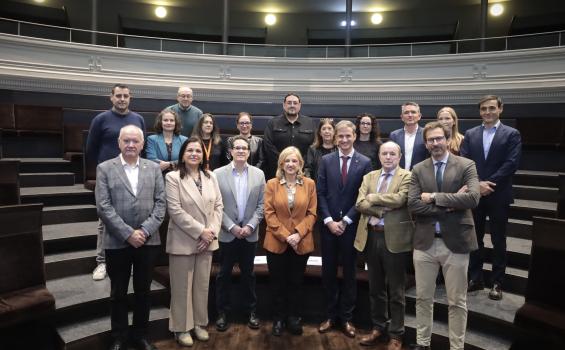
The Vice-Rector for Scientific Policy, Pilar Pina, will present the event, which will include a round table with the authors María Climent and Raquel Pérez, researchers in Embryology and Epigenetics; Antonio Urries, director of the Assisted Reproduction Unit of Quirónsalud Zaragoza, and Antonio Valdovín, director of the short film

(Zaragoza, Monday, October 5, 2026). Spain is among the European Union countries where motherhood is most delayed . In the last 40 years, the average age of women having their first child has risen from 25 to over 31 , and this is accompanied by a low fertility rate: an average of one child per woman. Thus, in Spain, the number of births has halved since 1980.
This delay in motherhood stems from a complex social reality involving educational, professional, economic, and personal factors, but it encounters a biological limit: female fertility declines progressively with age. While the monthly probability of natural pregnancy is estimated at 25% at age 25, this drops to around 10% by age 40. Thus, a reduction in fertility is observed starting around age 30 and becoming more pronounced after age 35, when the risk of chromosomal abnormalities, such as trisomy 21, and pregnancy loss increases.
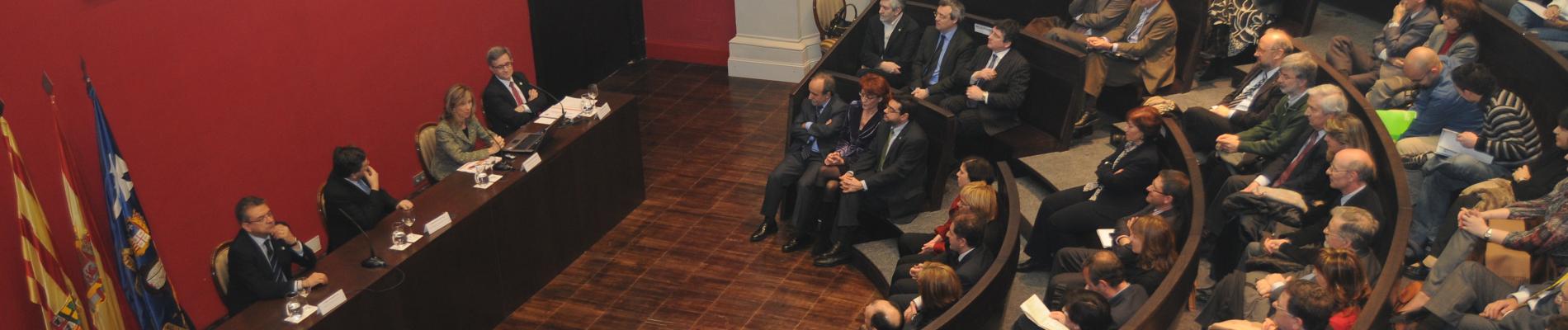
This is the starting point for AMORE (Providing Perspectives on Oocytes, Reproduction, and Age), a short film produced by the University of Zaragoza that aims to provide the public with rigorous scientific information about the relationship between age and fertility. The film, which combines scientific evidence and contemporary dance, will be presented on Thursday, October 8, 2026, at 18:30 p.m. in the Pilar Sinués Hall of the Paraninfo Building.
The Vice-Rector for Scientific Policy, Pilar Pina, will present the screening of the short film, followed by a round table discussion with the two authors, María Climent and Raquel Pérez , professors and researchers in the field of Embryology and Epigenetics at the University of Zaragoza; Antonio Urries , director of the Assisted Reproduction Unit at Quirónsalud Zaragoza; and Antonio Valdovín , a director, screenwriter, and producer from Aragon. This initiative is also funded by the Spanish Foundation for Science and Technology (FECYT) of the Ministry of Science, Innovation and Universities, in collaboration with the Spanish Fertility Society and Quirónsalud.
Furthermore, infertility is not an exceptional situation.
According to World Health Organization, approximately one in six people Women of reproductive age will experience infertility at some point in their lives. In this context, “to have access to accurate information Understanding how reproductive capacity changes with age can help make more informed decisions about motherhood and fatherhood.” he stated today at a press conference press Vice-Rector for Scientific Policy, Pilar Pina.
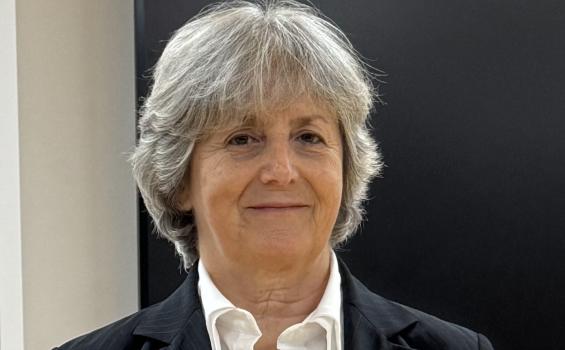
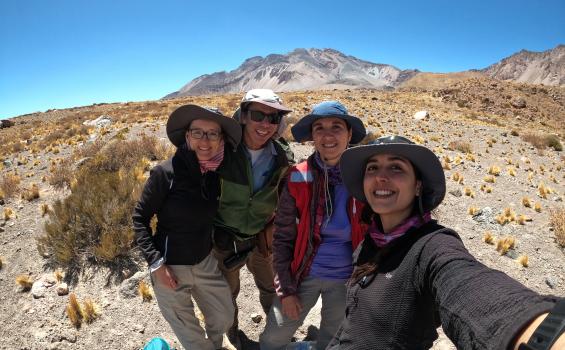
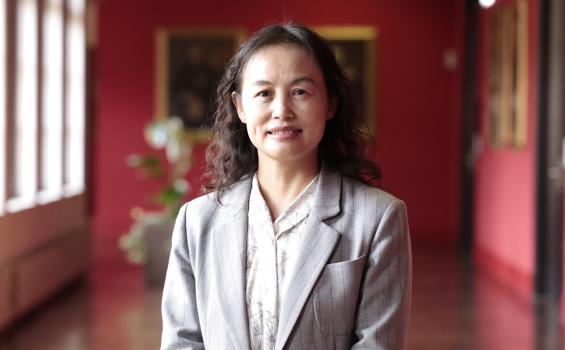
The project is led by researchers María Climent and Raquel Pérez , professors in the Department of Anatomy, Embryology and Animal Genetics at the University of Zaragoza, belonging to research groups at the Aragon Health Research Institute (IIS Aragón) and the Aragon Agri-Food Institute (IA2). They study how maternal age causes changes in gene regulation and its relationship with proper embryonic development: “When disseminating our research,” they pointed out , “we realized the lack of information about the consequences of delayed motherhood in different social scenarios, and we decided that it was very important to raise awareness and provide information on this topic so that people can plan their reproductive life and family project.”
“AMORE aims to bring rigorous scientific information, especially to young people, about what happens to eggs over time and how these changes can influence fertility, embryonic development, and the chances of getting pregnant . But AMORE doesn't just tell the science with words,” explained María Climent and Raquel Pérez today, adding: “ Contemporary dance is an essential part of the narrative, translating emotions and uncertainties related to reproductive aging and motherhood into the language of movement . Science and dance thus combine to address a complex topic from a rigorous, visual, and accessible perspective.”
Furthermore, the short film brings together the voices of leading researchers and professionals in assisted reproduction, embryology, and molecular biology . Among the participating experts are researchers Diana Guallar, from the Singular Center for Research in Molecular Medicine and Chronic Diseases (CiMUS); Deborah Bourc'his , from the Curie Institute in Paris; and Rita Vassena , from the Spanish Fertility Society (SEF); professors Ignacio de Blas and Pedro Muniesa , from the University of Zaragoza; as well as embryologists Antonio Urriés , director of the assisted reproduction unit at the Quirónsalud Zaragoza group, and Patricia Fauque , embryologist at the Cochin Institute in Paris.
The direction is in charge of Aragonese filmmaker Antonio Valdovín and features the participation of Aragonese creative professionals such as Álvaro SanchoContemporary dance is brought to the project by the dancers Carlos Campo, Ariadna Allusa, Pablo Pérez, Laura López and Ingrid Magrinyà.
Following its presentation on October 8, 2026 in the Paraninfo of the University of Zaragoza, AMORE will begin a screening program and round tables in Zaragoza and Santiago de Compostela, and will participate in the Utebo Film Festival and in national and international festivals.
If add-on:
Link to the short film trailer: https://www.youtube.com/watch?v=xqgzw5jvLtc
News conference, on the Unizar YouTube channel: https://www.youtube.com/c/UniversidaddeZaragoza_es
Brief statements from the researchers: https://cloud.unizar.es/index.php/s/See2o44b2b9QNCP
Screening of the short film
Thursday, October 8, 2026 at 18:30 p.m. in the Pilar Sinués room of the Paraninfo.
Program:
Presentation: Mª Pilar Pina, Vice-Rector for Scientific Policy at the University of Zaragoza.
Screening of the short film AMORE. Conversation between:
Antonio Valdovín, Aragonese director, screenwriter and producer.
Antonio Urries, director of the Assisted Reproduction Unit at Quirónsalud Zaragoza.
María Climent y Raquel Pérez, professors and researchers in the field of embryology and epigenetics.